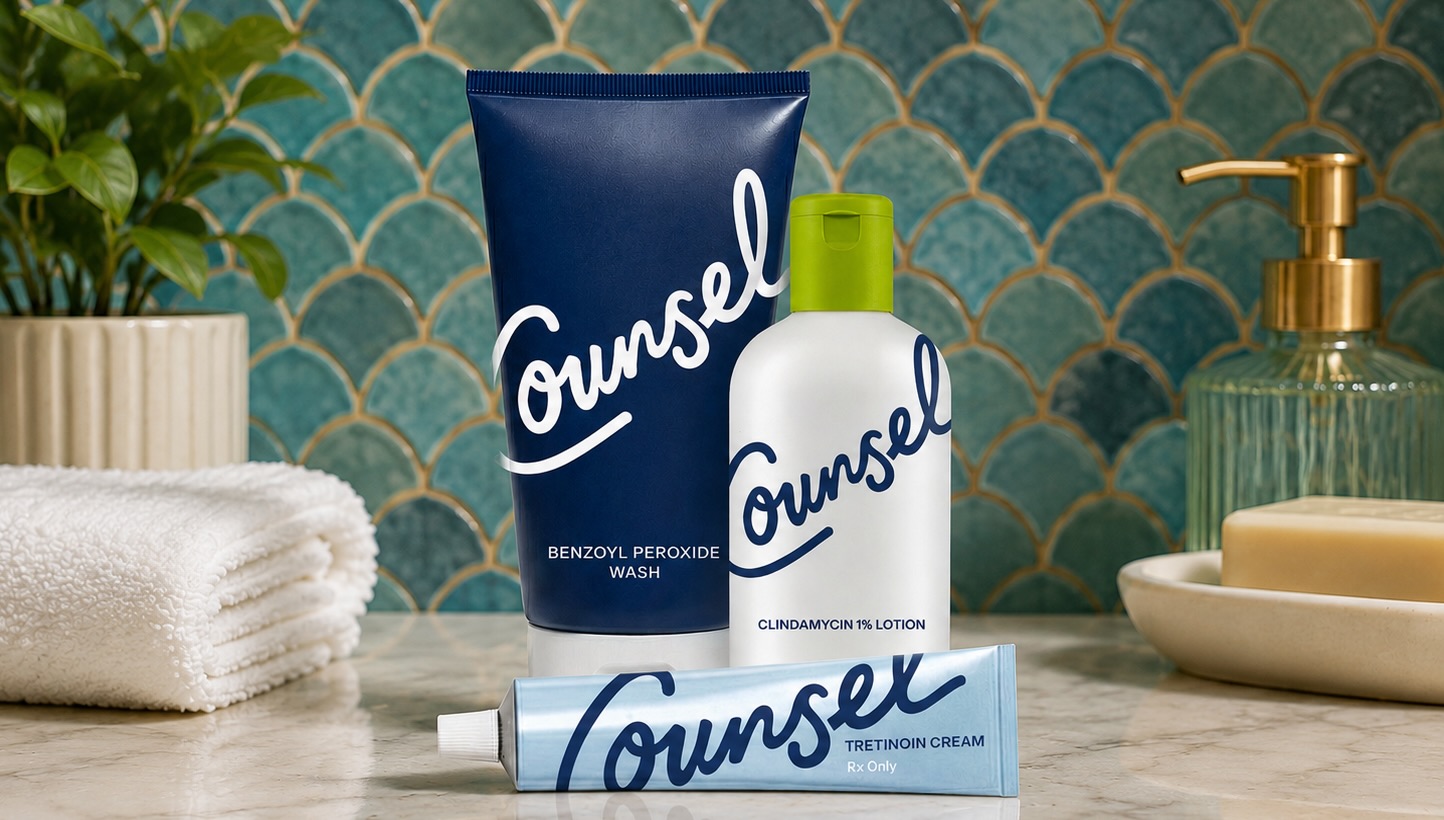
Over the counter (OTC) medications can be effective for mild cases, but persistent breakouts, inflammation, scarring, or large affected areas often need higher concentration prescriptions like clindamycin, higher strength benzoyl peroxide, and tretinoin.
Acne is extremely common, but treatment does not always happen as quickly as it should. In a survey reported by Dermatology Times, only 3 in 10 respondents reported going to a dermatologist for acne treatment, while 60% reported feeling like acne was something they “just have to deal with.” Many people spend months trying new cleansers, spot treatments, or home remedies before realizing their skin needs a different level of treatment.
Over-the-counter, or OTC, products are usually considered the starting point for acne care. Drugstore cleansers and topical treatments with salicylic acid or benzoyl peroxide are commonly available and can help mild acne breakouts. However, acne is not a one-dimensional condition; there are several different types of acne that can result from various causes, such as clogged pores, bacteria, excess oil production, and inflammation.
A single product may help in the short term, but many people may rotate acne products repeatedly, hoping for improvement that never comes. When breakouts persist, it can feel frustrating and discouraging.
Needing medical treatment for acne is normal and common. Prescription care may become appropriate when you notice:
Needing acne medication is not an extreme measure; it simply means your skin requires a more targeted approach.
OTC products are designed for general use and must remain mild enough to be safe without supervision. Treatments such as benzoyl peroxide washes are widely available and effective for many mild-to-moderate acne cases. They reduce acne-causing bacteria and inflammation and are typically applied to the entire affected area rather than individual pimples.
Prescription acne medications use higher concentrations and regulated formulations that are approved for selected acne types. Because these medications may cause irritation or require combination therapy, physician oversight is important to guide application, pacing, and follow-ups.
Acne treatment works best when it is tailored to your acne type and used consistently. Clinical trials show that a combination prescription can reduce inflammatory lesions by up to 80 percent in 12 weeks, and guidance from a doctor helps avoid irritation and the trial-and-error of over-the-counter products.
Topical acne medications act directly on the skin and are effective for many individuals. Below are two of the most commonly prescribed topical acne medications:
Your clinician will consider your acne type and severity, skin sensitivity, and prior treatment history to help you select the right treatment. Adherence matters, too, because acne medications only work when used consistently. According to guidelines from the American Academy of Dermatology, the best choice of acne treatment depends on individual patient factors and is never one-size-fits-all.
Access to dermatology care remains a nationwide challenge, and scheduling visits or navigating lengthy appointment delays can further delay treatment.
Counsel offers a modern solution. You begin by securely sharing acne history, prior treatments, medications, labs, photos, and more. Counsel AI then integrates additional context from prior medical history to determine eligibility. If eligible, you can add a Counsel physician to your chat to review and explain your personalized treatment plan. They will also provide your initial prescription medication online so you can pick it up at your local pharmacy. Once your treatment has started, you will have access to three months of unlimited follow-ups with Counsel AI and a physician. These follow-ups will help you navigate side effects, monitor progress, and make adjustments if appropriate.
Patients can check if they are eligible for acne treatment for free. If eligible and you’d like to get started on your care plan, adding a doctor to the chat costs $29 (or free for members of Signature, Counsel’s premium subscription). This includes your consultation and initial prescription, as well as three months of unlimited follow-ups with Counsel AI and a physician.
Your final cost will depend on which treatment you choose and your insurance coverage. Several commonly used options are available for under $10 per month.
Improvement after acne treatment takes time, and many treatments require several weeks before visible changes are noticeable. For many people, clearer control may take several months, which is why consistency is so important.
Your clinician may adjust the frequency or strength of your medication depending on how your skin responds, so follow-up is essential. If progress stalls or irritation develops, let your clinician know so that they can refine your plan and keep you on track.
Prescription acne treatments are most effective when matched to your skin and supported with proper guidance over time. Personalization, consistent use, and clinician oversight are key to improving results while limiting irritation or other side effects. With physician-guided care, acne management becomes more predictable.
Maximize results with your personalized acne treatment from Counsel. Check your eligibility today.

The Counsel Health editorial team is a multidisciplinary group of writers and editors dedicated to delivering clinically grounded, evidence-based health information. Their work is informed by real-world care delivery and guided by physician expertise, ensuring content is accurate, accessible, and trustworthy. By translating complex medical topics into clear, practical guidance, the team helps readers understand their health, explore care options, and make informed decisions in a rapidly evolving healthcare landscape.

Dr. Rishi Khakhkhar is CMO at Counsel Health. A practicing emergency physician and founding team member, he leads the clinical team in building best-in-class asynchronous care models. Previously, he served as Medical Director of Mount Sinai’s Virtual Urgent Care, the health system’s largest telemedicine service, and led emergency department operations for Hospital-at-Home while supporting mobile integrated health initiatives across the care continuum.
Our content is created for informational purposes and should not replace professional medical care. For personalized guidance, talk to a licensed physician. Learn more about our editorial standards and review process.